

By Emily Rodriguez
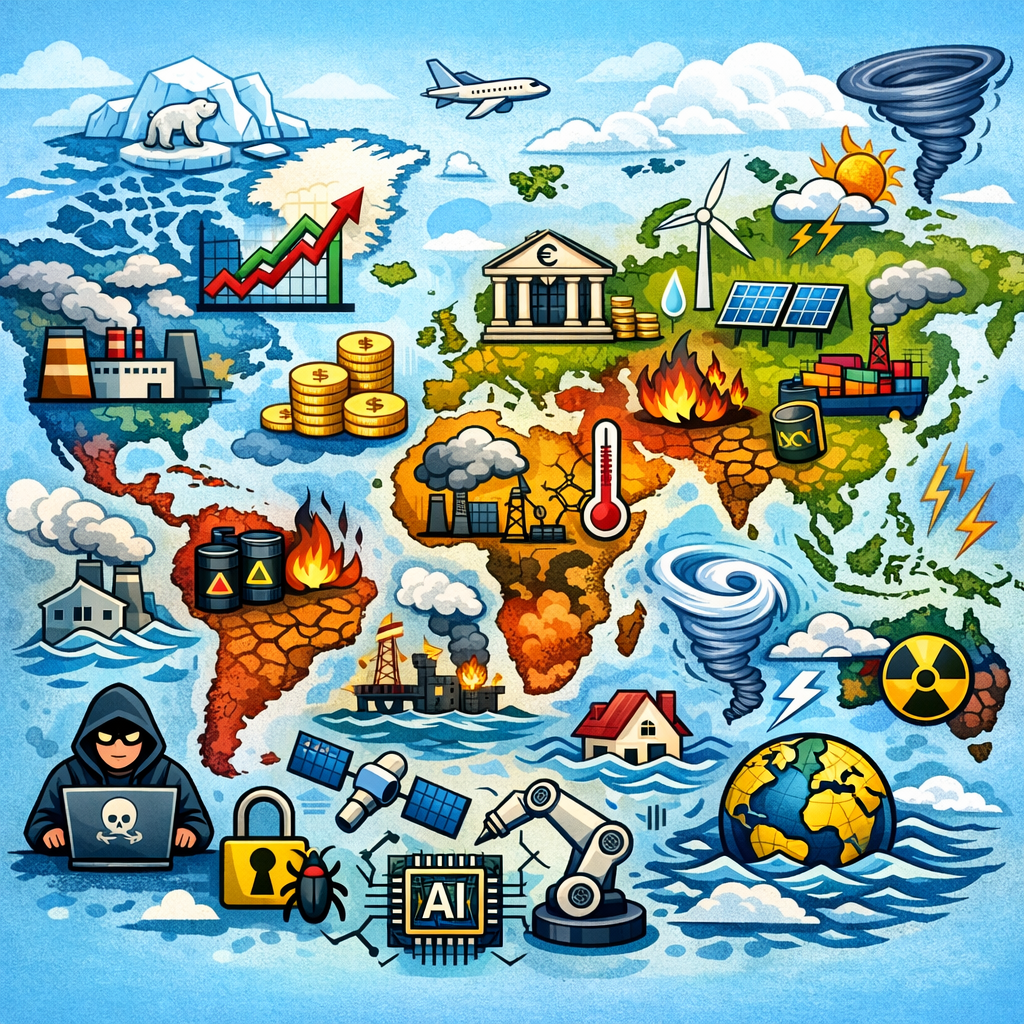
Every corner of our global community is feeling the ripples of change—not just through headlines, but in the air we breathe, the goods we buy, and the institutions we once trusted. Several major risk trends are realigning not only international relations but also the everyday lives of people in Los Angeles and beyond.
1. Geoeconomic competition taking center stage
More than traditional diplomacy, countries are turning to economic levers—trade policy, investment deals, supply chain control—to project power and secure influence. That’s because geopolitical conflicts have become too costly, and tech and money moves across borders faster than troops ever could. Comparisons to past eras of “economic statecraft” are increasing as nations navigate sanctions, resource competition, and trade realignment.
2. Information disorder and social polarization
Trust in public institutions, media, and democratic norms has eroded as misinformation spreads online. Generative AI, deepfake technology, and social media echo chambers are not distant possibilities—they’re shaping how people think and vote today. These pressures are breaking societal cohesion, fueling political extremes, and making consensus harder to reach—on climate, migration, you name it.
3. Technological disruption: boon and risk
Impressive as the pace of innovation is—AI, renewable energy, biotech—it’s also uncoupled from governance and equity frameworks. Rapidly emerging tech anomalies include algorithmic bias, regulation gaps, and monopolistic tendencies. In an interconnected world, having the fastest or the biggest tech is no longer enough; how responsibly it is used matters.
4. Environmental risks and climate urgency
Extreme weather events, biodiversity loss, and water stress are no longer “future threats”—they’re current crises in many regions. Global risk assessments show environmental dangers pushing further up the ladder. For cities like Los Angeles, that’s more frequent heat waves, wildfire risk, drought stress, and the domino effects on public health, housing, and energy systems.
Bringing global risks home to Los Angeles
What does all this mean locally? In Southern California, supply chain disruptions can mean delayed technology imports, costlier goods, or energy instability. Misinformation: a challenge for local media, civic engagement, and public health campaigns. Technological policy: when the state or city debates about regulating AI, privacy, or data collection, those are decisions shaped by global trends. Environmental harm: rising insurance costs for wildfire-prone zones, water restrictions, or even zoning drawn anew with climate in mind.
What local communities can do
- Stay informed and media-literate: understand sources, pause before sharing dramatic posts.
- Support policy efforts that demand regulation in tech and climate—local councils, state laws, citizen initiatives.
- Vote with an eye on global interdependence—trade, migration, sustainability all affect your neighbourhood.
- Build personal resilience—invest in energy efficiency, water conservation, community networks.
Global risk isn’t just a concept for diplomats or think tanks—it’s a backdrop to every decision and every day. Recognizing the patterns gives us more power to shape outcomes that are just, sustainable, and grounded in shared well-being.